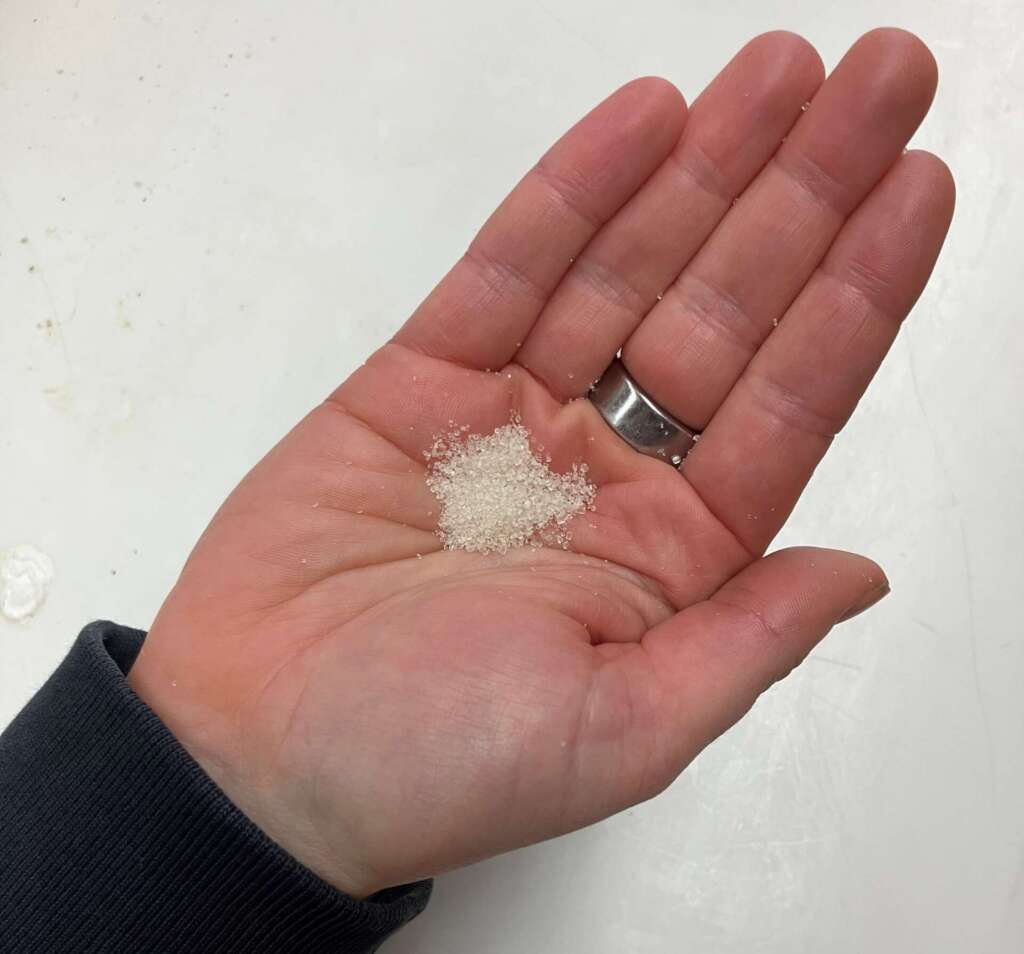
Let’s talk about sugar – specifically, sugar in wine. Wine grapes contain natural sugar but, in the course of transforming grape juice into wine, virtually all the natural sugar converts to alcohol. Any sugar left in finished wine, called residual sugar, is negligible. But, as with all things related to winemaking, there is more to the story.
Sugar used in winemaking comes in a couple of forms –dry sugar like we use at home, and residual sugar from grapes. The sugars are used at different stages of winemaking and for different purposes – to aid in fermentation or achieve a desired mouthfeel, for example – but at King Estate we do not use sugar as a sweetener in our wines.
What is Brix?
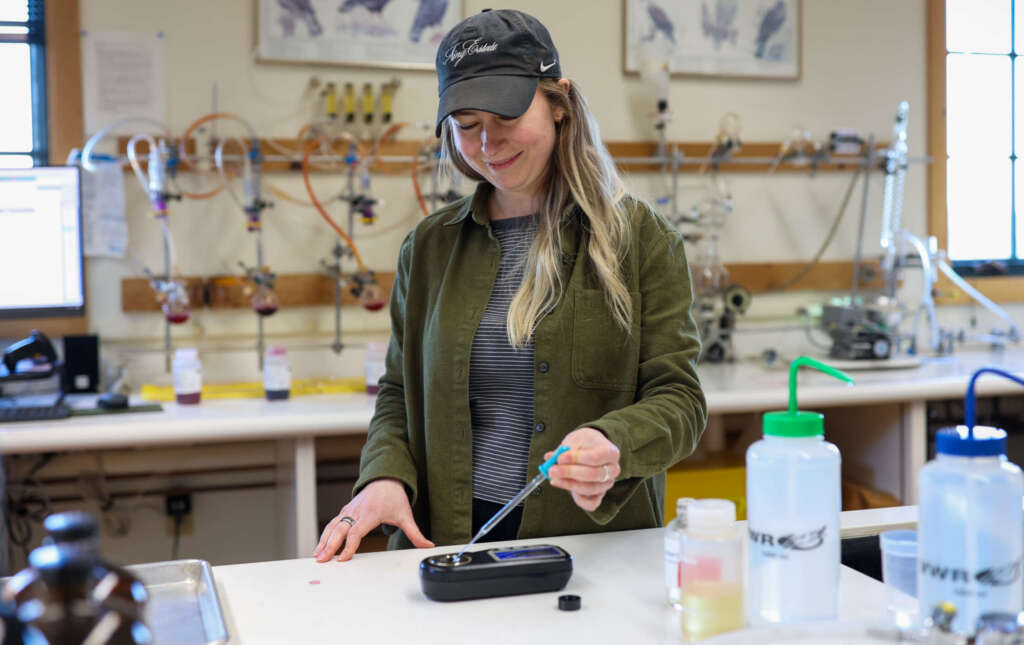
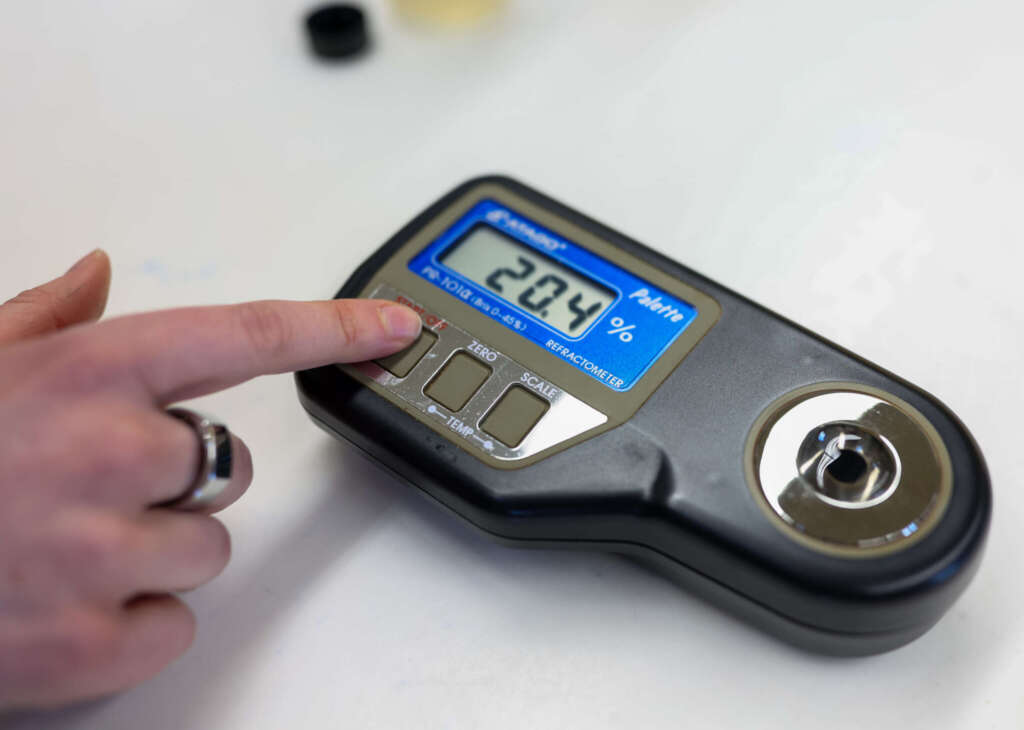
The sugar content of grapes is measured by Brix, pronounced bricks, named for a 19th-century German mathematician and engineer who developed the measurement. Brix is counted in degrees – one degree Brix equals 1% of sugar in 100 grams of grape juice. Leading up to harvest, crews bring grape samples into our lab almost daily to be tested for Brix, a key factor in deciding when to pick. Grapes are considered to be at ideal maturity and ready for harvest when their Brix levels reach 20 to 25 degrees, depending on the varietal. Sometimes, due to the site or weather, grapes are harvested before they reach their target Brix. When that happens, winemakers can make adjustments during the fermentation process using a process called chaptalization.
Chaptalization aids fermentation
Chaptalization comes into play if the grapes are below target Brix. In warmer years, when the grapes ripen to full sweetness on the vine, chaptalization may not be necessary at all. In cooler years, it’s a tool that helps the wine ferment. Adding dry sugar when the grapes don’t produce enough of their own – chaptalization – is a time-honored practice, especially in cooler climates like Burgundy. Whether naturally occurring or added, sugar is an essential ingredient in the making of wine – not to add sweetness but to aid in fermentation.
The other time that winemakers may use a form of sugar is after fermentation. To achieve the desired balance and texture in the wine, winemakers may decide to add some unfermented grape juice to achieve optimal balance and texture. As with chaptalization, the addition of sugar in the form of grape juice is not to add sweetness but rather is used as a sensory tool to bring out the best in the finished wine.
Sugar and calories
People trying to limit their sugar intake often wonder how wine factors in. Here is some good news. While standards for “dry” wine can vary, virtually all King Estate wines qualify as dry with negligible levels of residual sugar. One exception is Muscat, our dessert wine, which is deliciously sweet. Residual sugar is measured in grams per liter, or g/L. Our white wines are in the range of 2 to 5 g/L; reds are one g/L or less. A bottle of wine contains three-quarters of a liter. An average 5-ounce glass of white wine contains about 1/8th of a teaspoon of sugar, or less than 3 calories. A similar sized serving of soda has 16 to 19 grams of sugar, or 58 to 68 calories. From the standpoint of sugar consumption, feel free to enjoy your favorite glass of King Estate wine without reservation.