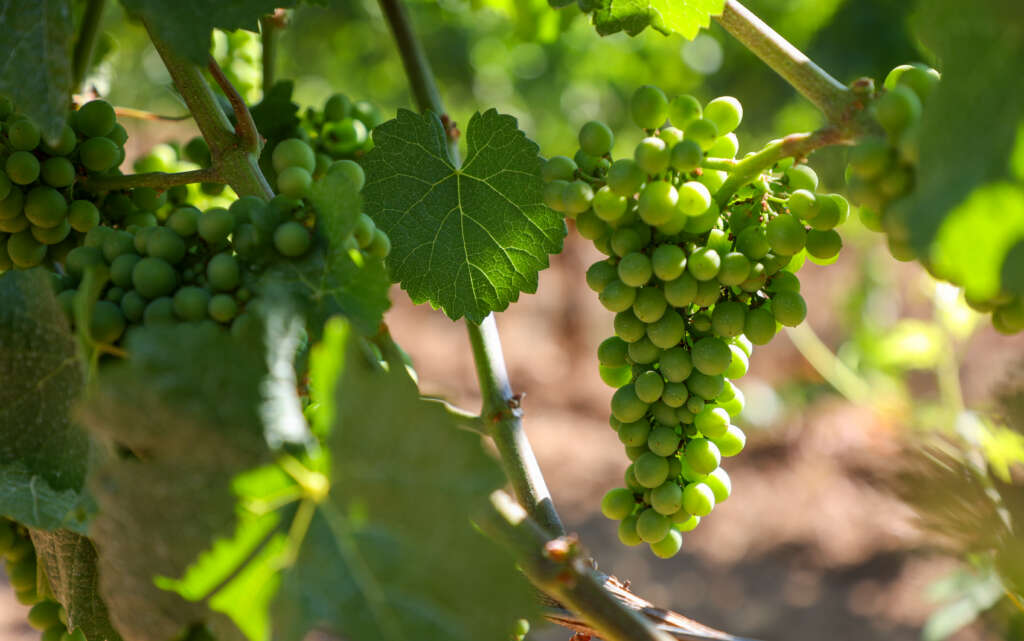
The unheralded, unglamorous but very important work of cluster counting is happening this month. The process is crucial because it’s how we estimate the size of the crop we can expect at harvest. Once those estimates are made, we can plan, pick and schedule accordingly. Everything flows from how much fruit comes in during harvest. As with so much in winemaking, it’s more complex than it sounds. As Viticulturist Edward Burke explains, “We want to know not just total tons but how much we are expecting of each variety and block.”
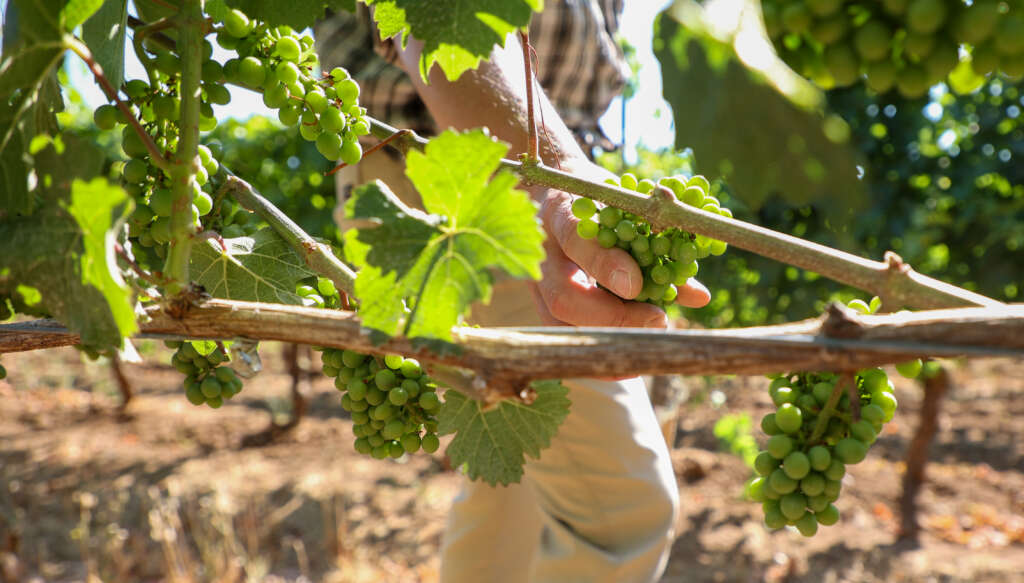
Counting clusters is done according to a calculation that has proven accurate. Counting every cluster is impossible and using eyeball estimates is meaningless. Over time we’ve learned that if we count random clusters in about 1% of the vineyard, we come pretty darn close to knowing what the yield will be. The process can begin as soon as flowers are visible or as the baby grapes start to develop.
Entering the lag phase
About midway into the count we begin measuring what is known as lag weight. In this lag phase, we are weighing the clusters when they are at what we predict to be half their harvest weight. The timing is determined by the growth cycle. As Edward explains, grapes will start to grow exponentially, but then the growth spurt slows and plateaus, followed by another spurt and another slowdown that leads to a ripe grape that is ready to harvest. Lag weights are taken during that first plateau – the lag phase. Multiplying the lag weight by two provides a good indicator of the total volume at harvest.
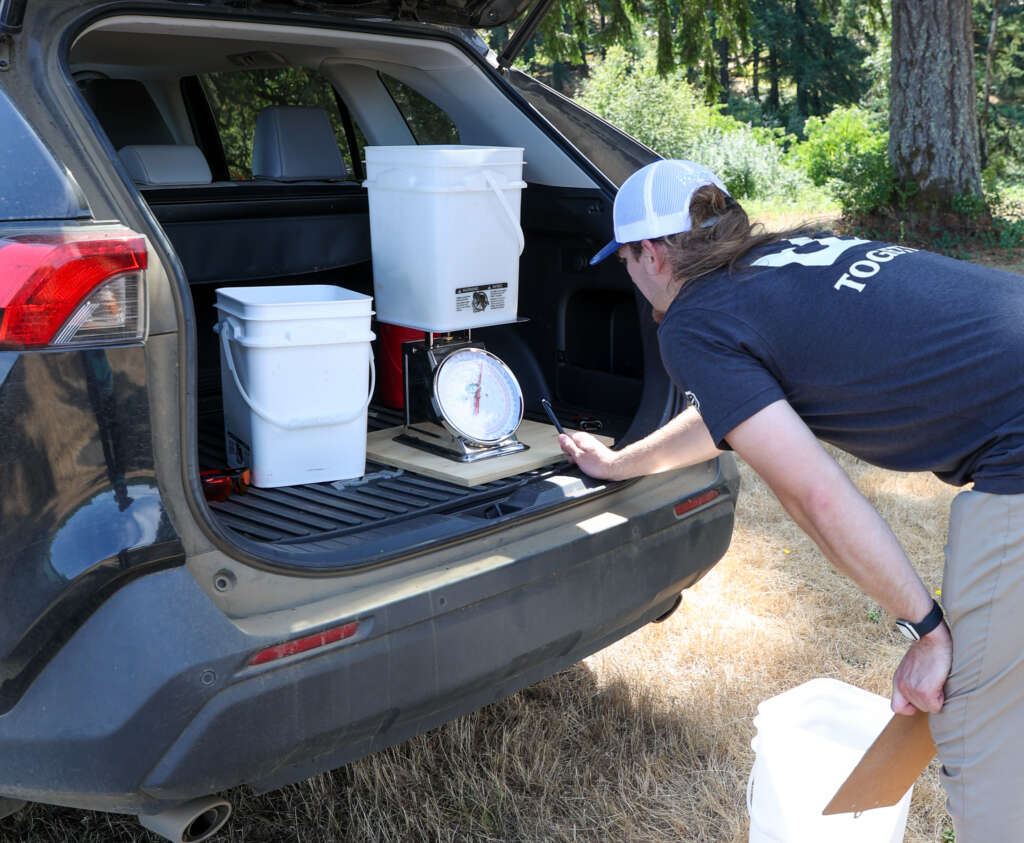
This isn’t Edward’s first rodeo so he knows better than to predict harvest volumes. But he is spending a LOT of time in the vineyard and has a front row seat to the grapes’ progress. When pressed, he will go so far as to allow that the fruit is looking exceptionally good.